SEND’ing Symbols
After SENCos learning walk around the school, they identified a number of areas of best practice including calm spaces, introduction of the zones of regulation with all staff attended training on in the September inset. The area identified for improvement was to use more symbols to assist children with SEND with following instructions, access learning and make choices. This term we have implemented visual throughout the SEND provisions and mainstream classrooms.
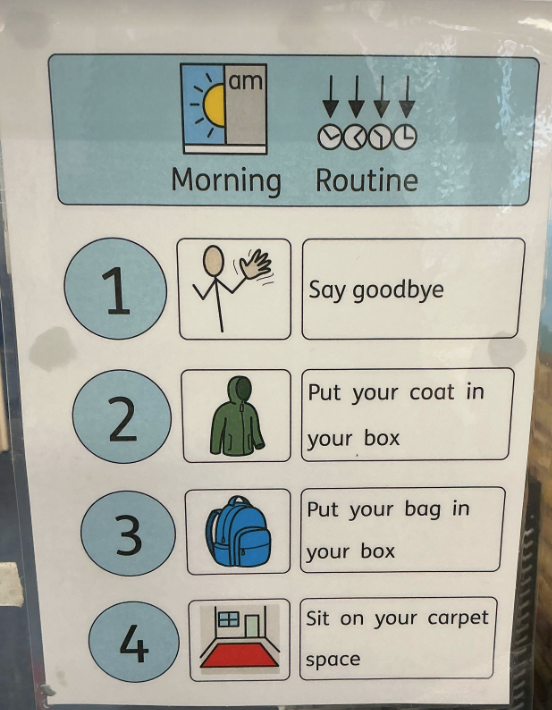
Sequencing with Symbols - EYFS
In EYFS, morning routine symbol boards can clearly display the sequence of actions when children arrive, such as a symbol for 'hang up coat' , 'put away lunchbox,' and 'choose a quiet activity.' Similarly, symbols for the end-of-day routine (e.g., 'get bag,' 'line up') help ease transitions. This visual support reduces reliance on verbal prompts, making the environment more accessible and allowing children to internalise the structure of their day, which builds confidence and reduces anxiety during transitions.This also reduced the cognitive load associated with following spoken instructions, which is particularly challenging for pupils with SEND.
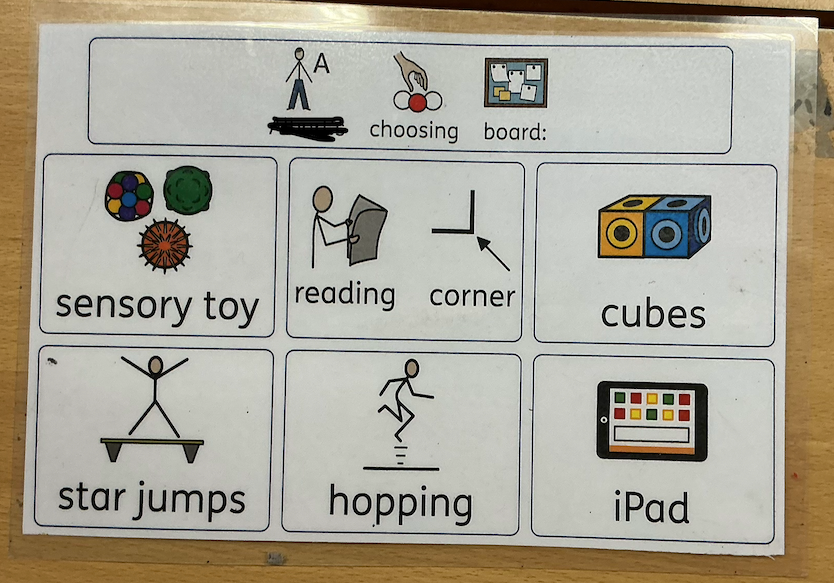
Signs to Self-Empowerment - KS1
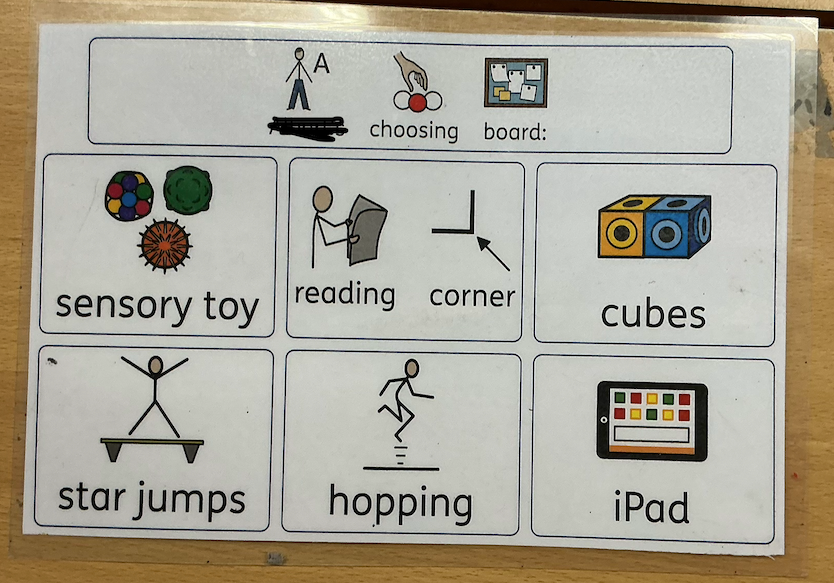
In KS1 across the school, with collaborative input from SALT, visual choice boards been implemented to support children with SEND. This is particularly beneficial for pupils with ADHD, who exhibit difficulties with attention and engagement. The choice board empowers students to proactively select structured, pre-approved sensory or movement breaks. These breaks serve as self-regulation tools, allowing the student to manage their emotions before successfully returning to their learning.
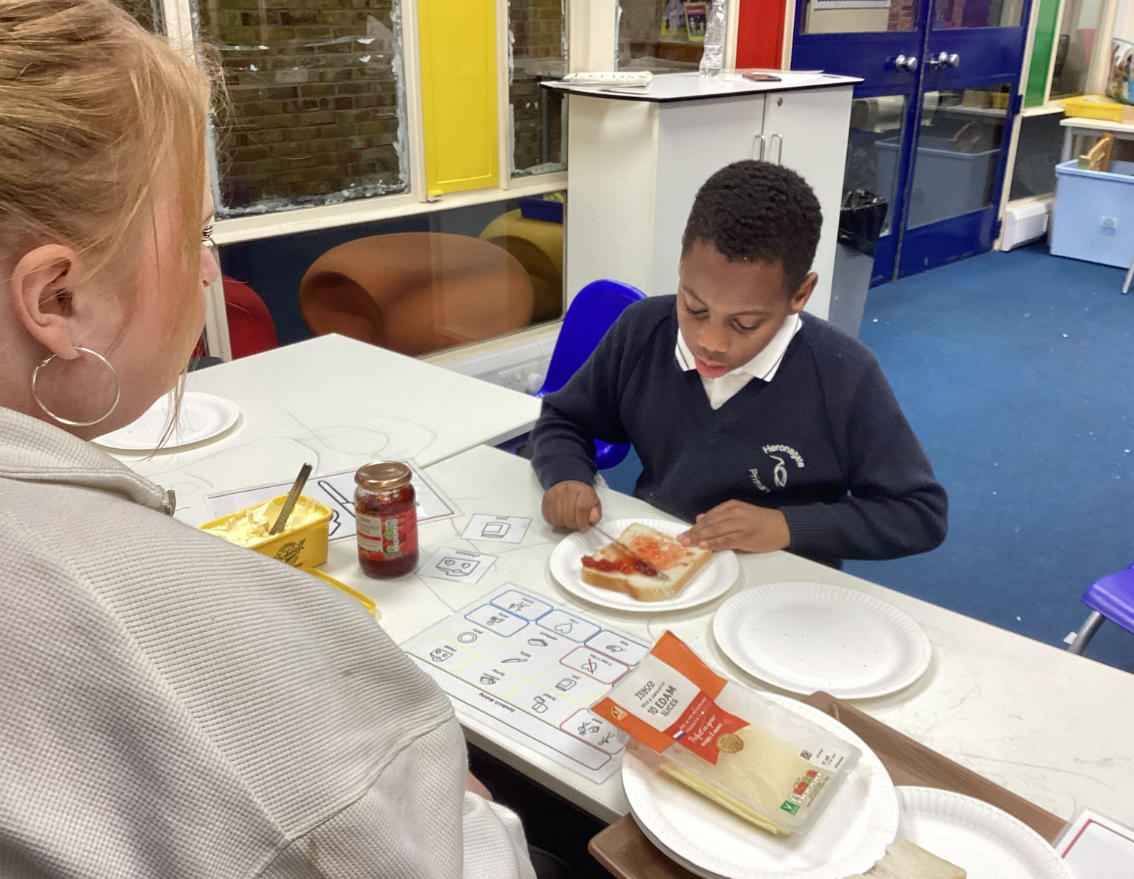
Cognition and Communication - LKS2
The children in the Nest use a variety of tools to communicate and share ideas about their learning. These tools include symbols, communication boards and topic boards. These visual aids allow the children to independently make their own decisions, choices and further enhancing their executive functioning skills to successfully follow instructions necessary to the learning. The image depicts a DT lesson where the children had to request and follow instructions to assemble a sandwich. The use of image and less language reduces cognitive load associated with following spoken instructions, which is particularly challenging for pupils with SEND. By using clear symbols, the lesson promotes independence in a way that all children can access and successfully participate in the curriculum.
How Are Hue Feeling - UKS2
The Zones of Regulation has been implemented across the whole school. This is a shared way to talk about their feelings without getting stuck on tricky words. This four-colour system (Blue, Green, Yellow, Red) helps them easily point out what's going on inside. This skill helps them feel more in control and responsible for their own behaviour, keeps them focused and ready to learn in the Green Zone, and makes them better at understanding and getting along with their friends, all of which is brilliant practice for moving up to secondary school.