
Additions the Mission
We are proud to show our excellent understanding of multiplication and division across the school. Children move from learning the concept of sharing equally using tactile resources to applying this to abstract written methods to solve division problems. Alongside this, children are introduced to the concept of repeated addition, which they are then able to recognise as multiplication. Children learn how to structure and present multiplication question in formal written methods reflecting the school’s calculation policy.
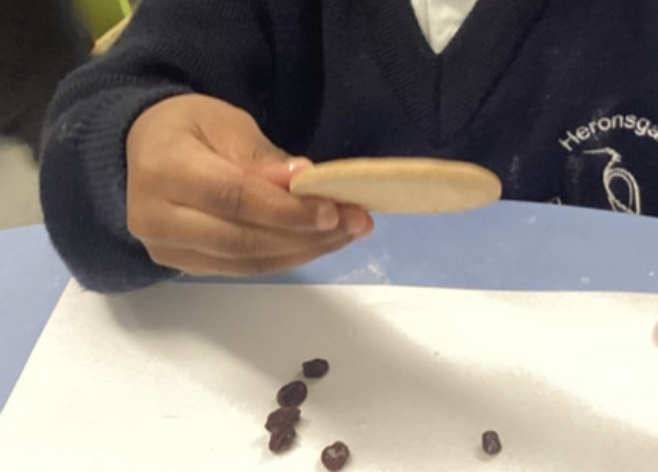
Share Fun Fair - EYFS
In Nursery, children were learning about sharing equally in a fun and practical way. The children had to count out how many children were in the group and then share out the plate of biscuits so that each child had one. After icing their biscuits, the children had to share out the raisins so that each child had the same number of raisins on their biscuit.
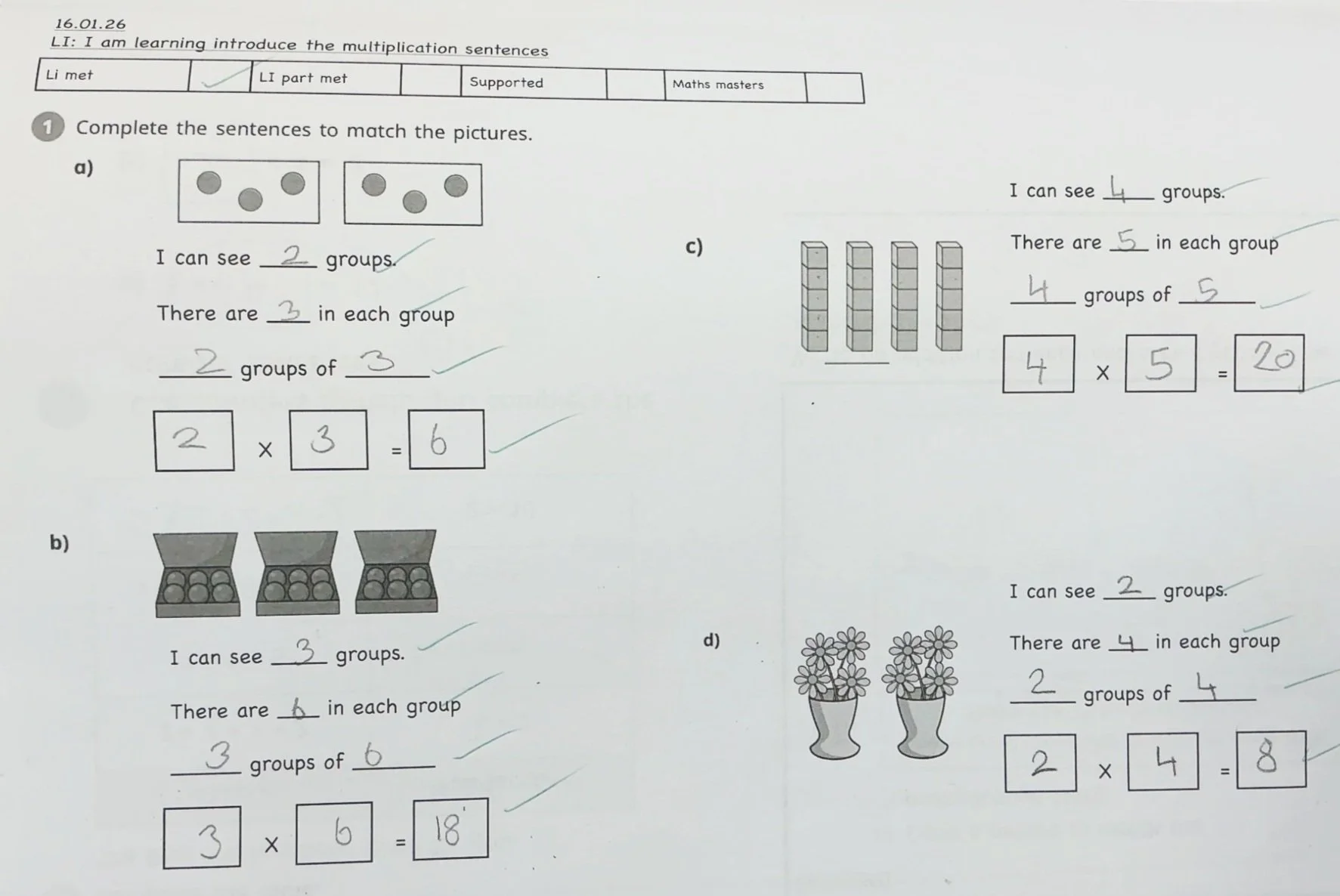
Multiplication Repeats the Fun - KS1
In Year 2, children have worked on drawing out models to show items shared out equally. They follow on by completing sharing sentences before moving on to writing out number equations that include the division symbol. To build on their understanding of multiplication, the children have worked on completing multiplication word and number equations alongside recognising that multiplication is repeated addition.
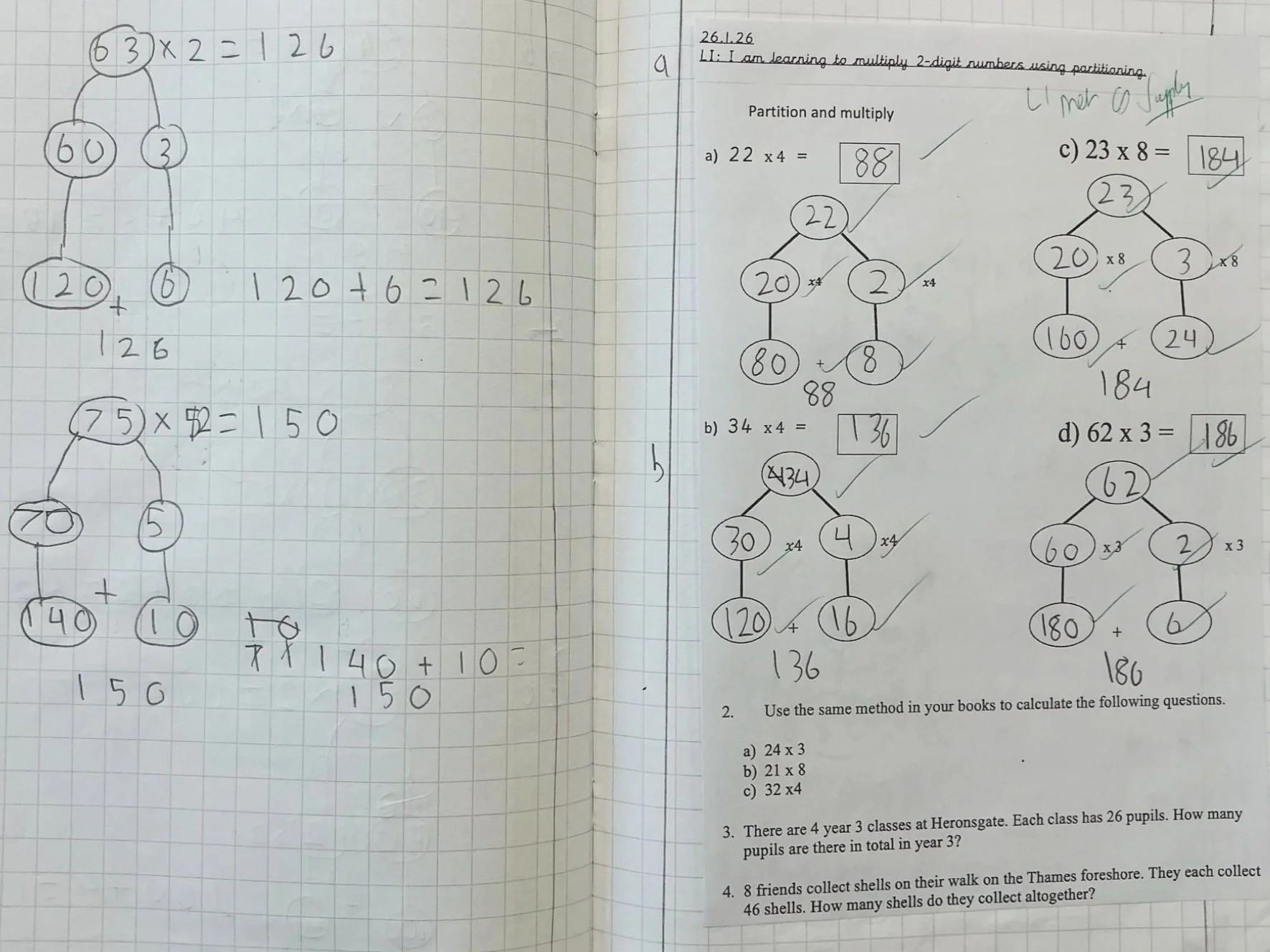
Numbers Twained, Knowledge Gained - LKS2
In Year 3, children begin to work on partitioning numbers into ten and ones. This allows the children to break down numbers into manageable and familiar components and reinforces their understanding of place value. Following on from this lesson, children begin learning and using expanded multiplication method building on their understanding of place value. The use of partitioning is also used in division within Year 3.
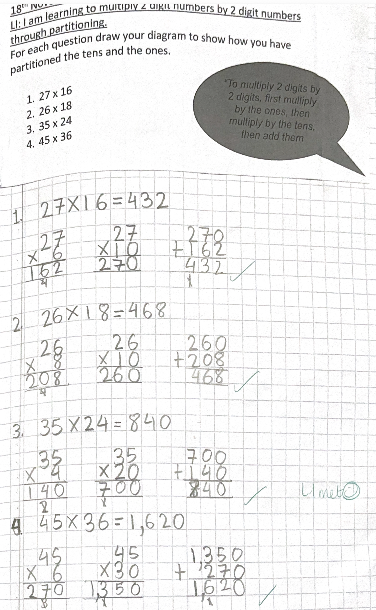
Big Multiplications, Short Steps - UKS2
In Year 5, children become more confident with partitioning and can independently partition two-digit numbers to multiply them by 1 digit numbers. Like Year 3, this breaks the steps into manageable chunks and allows for the understanding of distributive law whilst still maintaining the step of ‘multiplying by ones first’ which is used when completing long multiplication problems.