
Ten to Ten-Million
The pictures show our incredible understanding of place value. Children move from early concepts of number composition in which they learn that parts make a whole. This then leads to them understanding the value of 2 and 3 digit numbers, which provides the foundation for being able to partition numbers up to 10 million in different ways and understand how they can be represented pictorially and as a number equation.
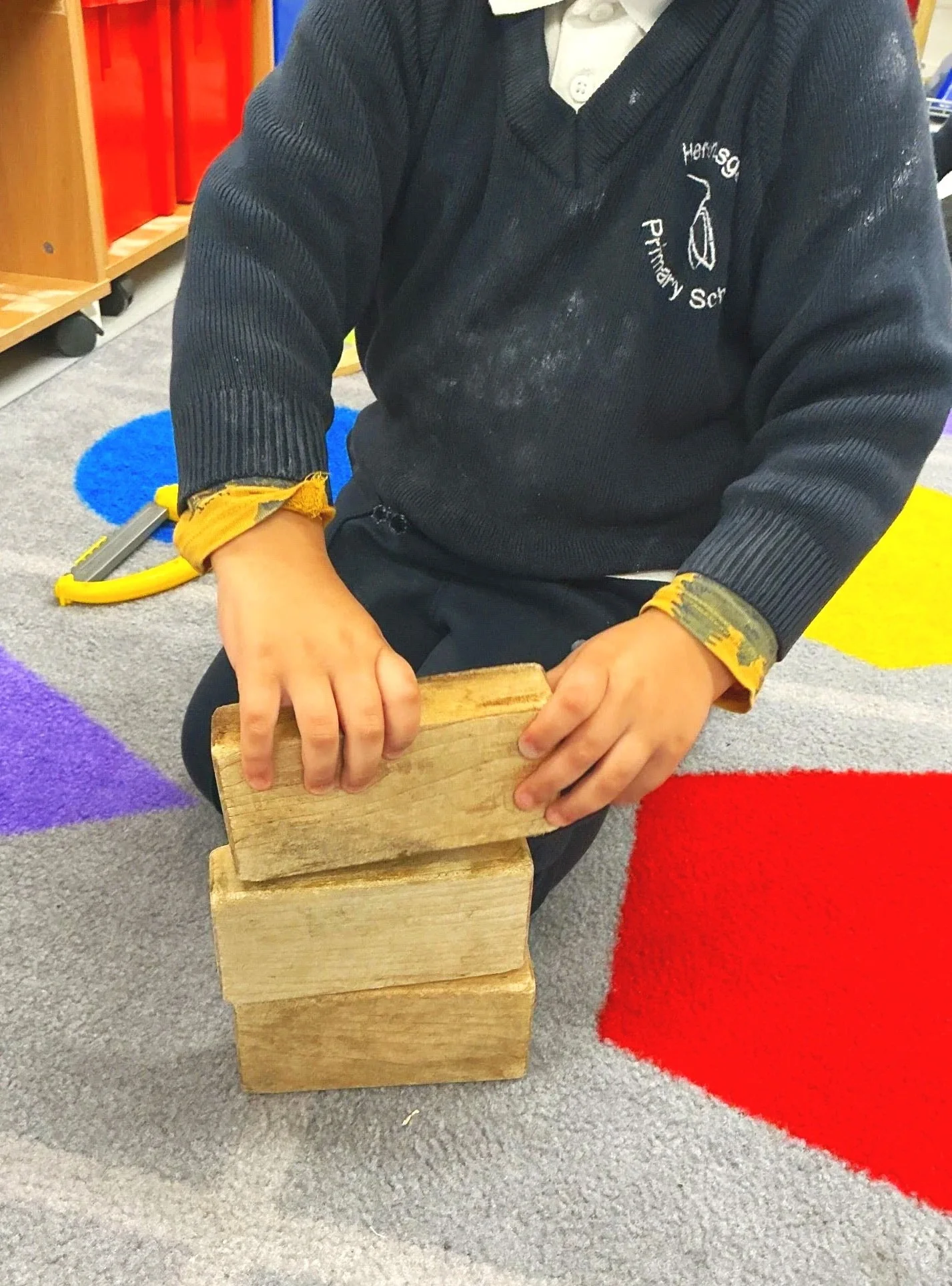
Building-Up the Numbers - EYFS
In Nursery, the children have been using physical objects like wooden blocks to introduce number composition which forms the basis for place value. They built towers and noticed that we can make our towers using different combinations of blocks. This helped children understand that a number's total value is made up of its constituent parts.
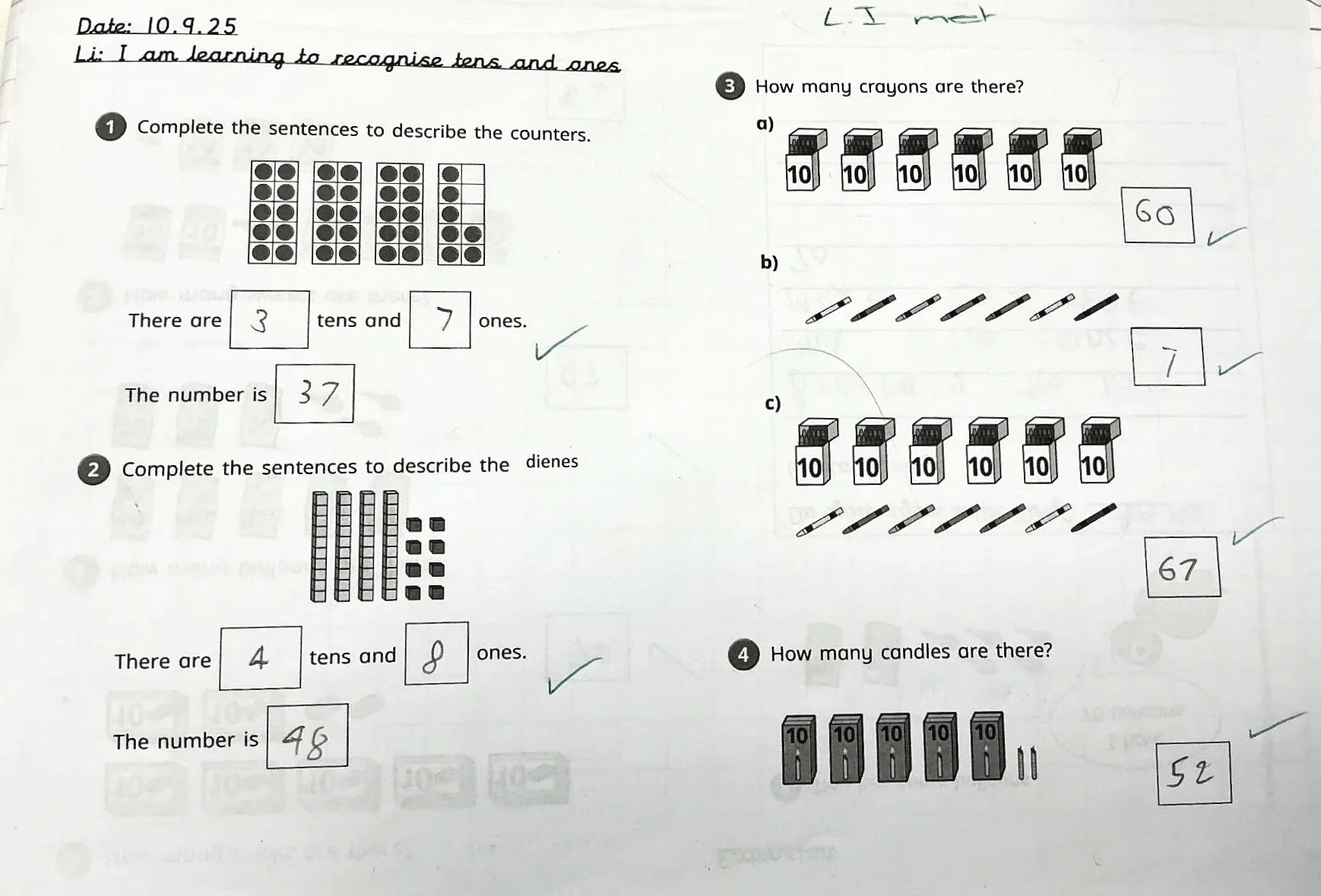
Building Base-10 - KS1
In Year 2, the children have been learning to recognise tens and ones. The children have used counters in ten-frames and dienes blocks to support their understanding of place value. They have also applied this understanding by counting groups of 10 objects and objects in ones. This learning shows children are able to use concrete and pictorial representations to describe, recognise and accurately represent two-digit numbers based on their place value components.
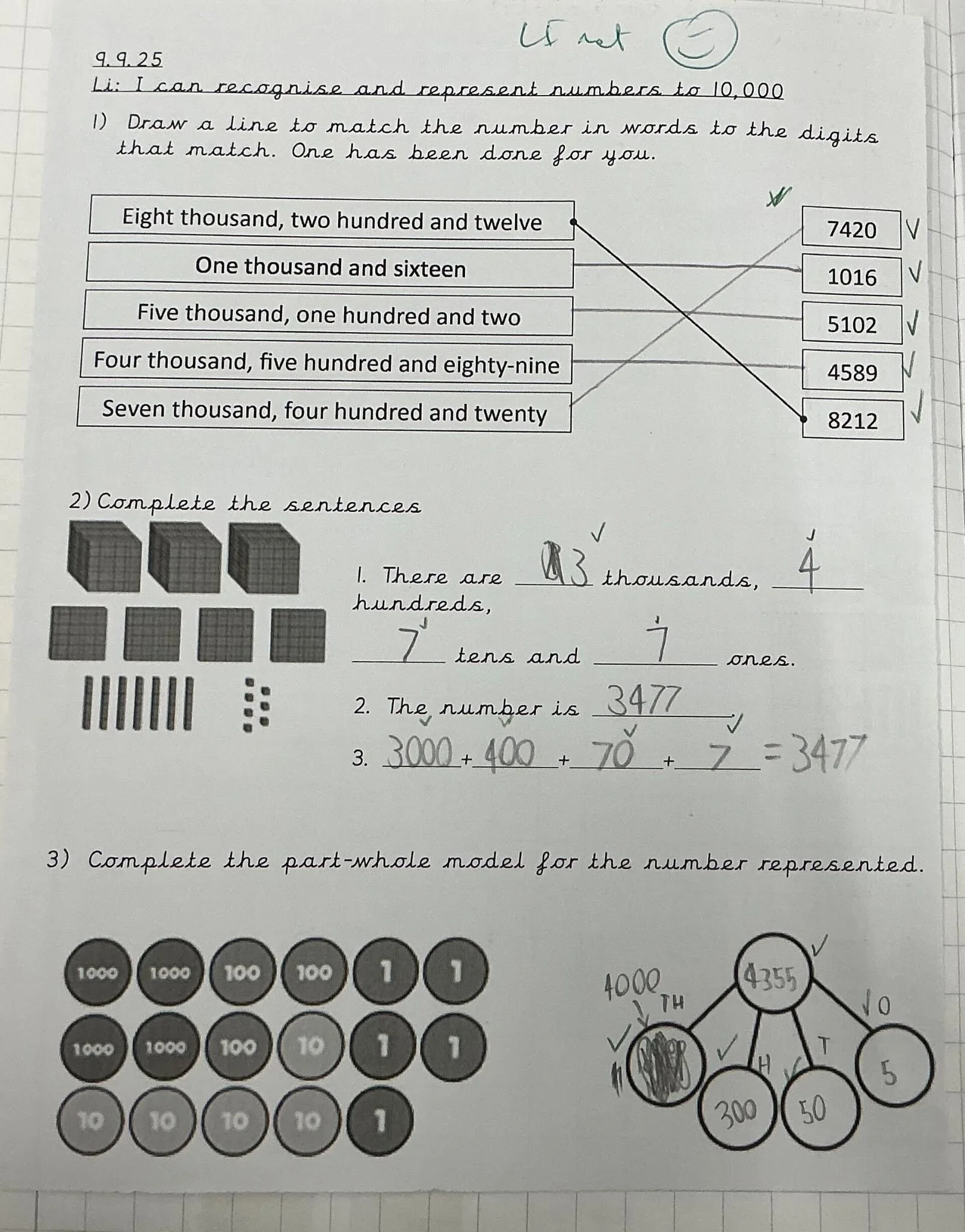
Seven, Eight, Nine - LKS2
In Year 4, the children began to recognise numbers up to 10,000. The children are encouraged to recognise numbers in written form as well as digits before identifying the value of digits within a number. This allowed the children to write the number as a whole and partition it. By being able to recognise the value of digits in a number and their place value, the children were able to use inequality signs to compare numbers alongside creating true statements when given a comparative number statement.
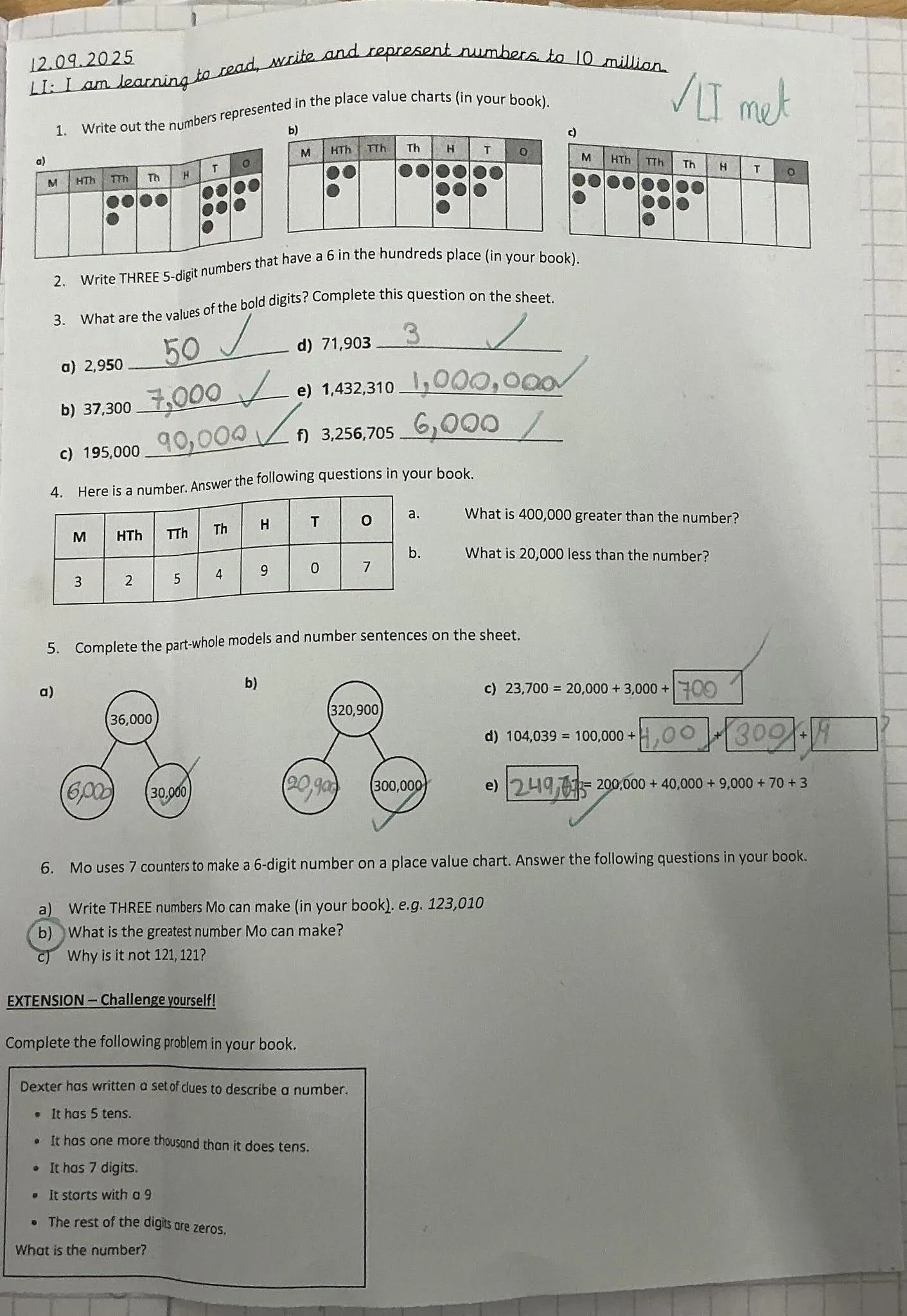
Heronsgate Millionaires Club - UKS2
In Year 6, the children began the term learning to read, write and represent numbers up to 10 million - building on the skills in LKS2. The children worked on recognising numbers represented in place value charts, the value of digits within a number e.g. the digit 5 in 2050 = 50 / 5 tens. They also revisited part-whole models and partitioning sentences to understand different ways numbers can be partitioned. Extension tasks encouraged children to follow a set of clues to describe a number.